For some children, solving a difficult question feels like a small victory. For others, it takes a little encouragement before they're willing to try. Olympiad exams can offer both a challenge and an opportunity to discover what they're capable of, but preparing for them shouldn't mean adding another stressful study session to an already packed school day.
Good Olympiad Preparation begins with understanding, not memorising. And a little consistency can go a long way.
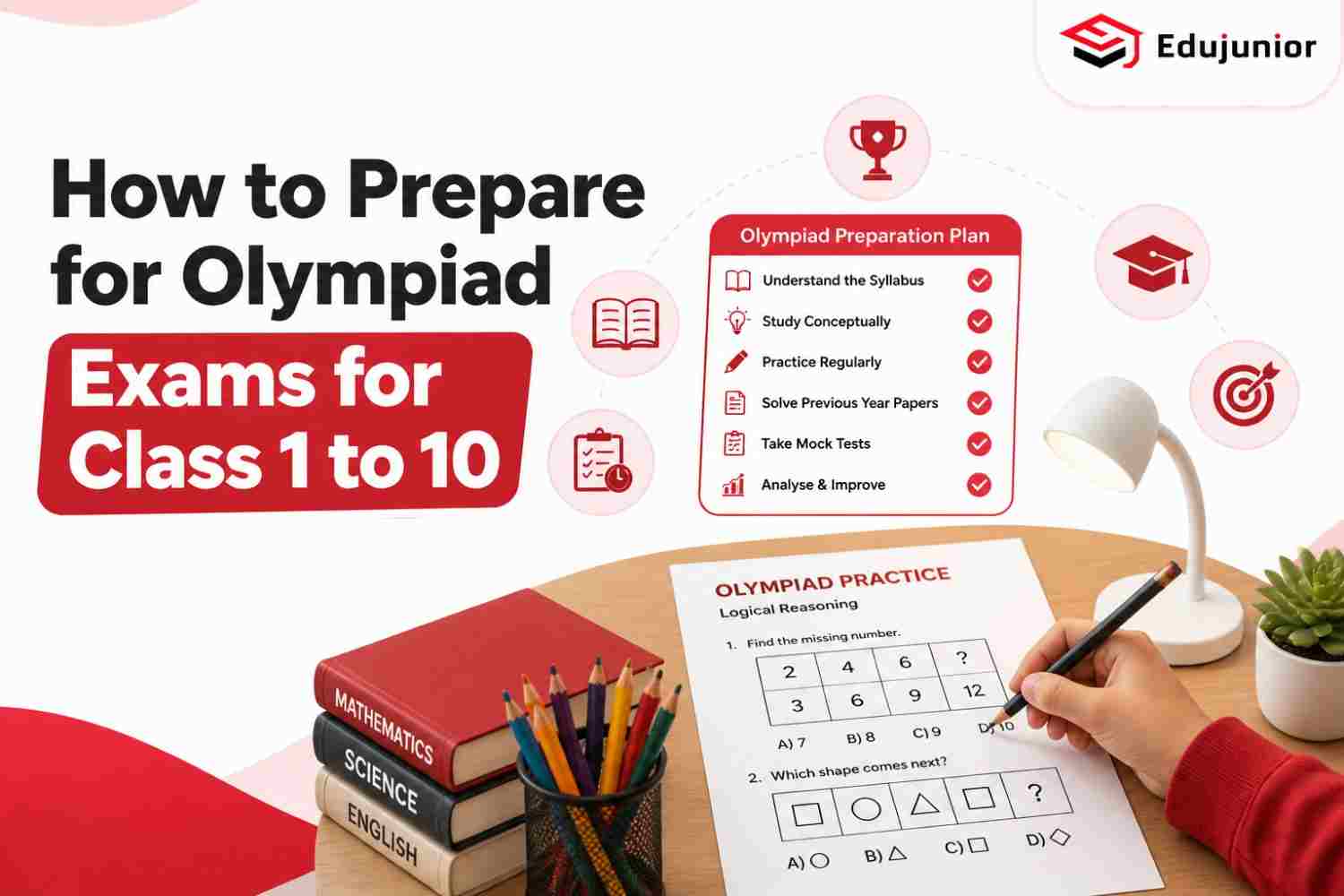
1. Understand the Syllabus Before You Start
Before buying guidebooks or downloading worksheets, check what the Olympiad actually covers. Different competitions focus on different subjects, concepts and difficulty levels.
For students in Classes 1 to 5, Olympiad Preparation should focus on basic concepts, vocabulary, number sense, observation and simple logical reasoning. Older students in Classes 6 to 10 can gradually work on application-based questions, analytical thinking and more complex problem-solving.
A clear syllabus makes preparation less intimidating. Children know what to practise and parents know where to offer help.
2. Make Practice a Habit, Not a Marathon
An hour of distracted studying rarely beats 20 minutes of focused practice. Children don't need to solve hundreds of questions every day to improve.
A realistic Olympiad Preparation routine could include revising one concept, solving a handful of questions and reviewing mistakes. Over the week, students can rotate between subjects instead of trying to cover everything in one sitting.
Consistency is particularly useful for maths calculations, science concepts, grammar, vocabulary and reasoning questions, where regular exposure helps children become more familiar with different question patterns.
3. Learn From Mistakes
Getting an answer wrong can be frustrating, especially for children who are used to doing well in school. But mistakes often reveal something a textbook test doesn't.
Did the child misunderstand the question? Forget a concept? Rush through the calculation?
Effective Olympiad Preparation includes revisiting incorrect answers and understanding why the right answer works. This builds accuracy and helps children approach unfamiliar questions with greater confidence.
4. Practise With Mock Tests
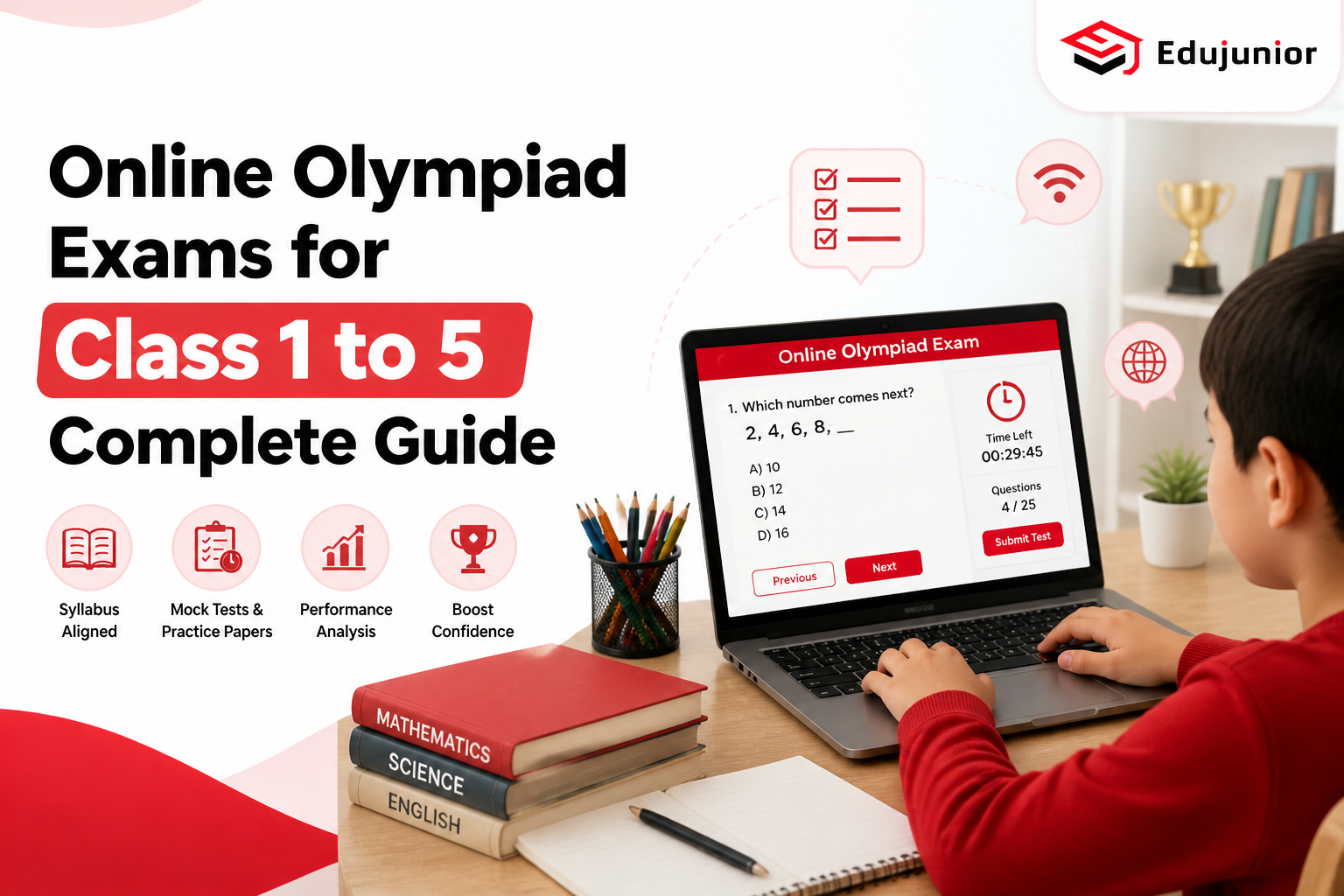
Mock tests introduce students to timed exams, question formats and the experience of solving problems independently. They also help children identify areas that need more attention.
During Olympiad Preparation, parents and teachers can use practice tests to track progress without treating every score as a judgement of ability. The objective is to become better prepared, not perfect overnight.
5. Keep Learning Enjoyable
Preparation doesn't have to happen entirely through worksheets. Science experiments, word games, puzzles, reading, drawing and everyday maths can make learning more engaging.
EduJunior, for instance, hosts online Olympiads in subjects such as mathematics, science and English, alongside creative competitions in drawing, storytelling, poetry and other activities. Exploring different formats can help children discover what interests them most.
The best Olympiad Preparation is the kind that leaves a child curious enough to keep learning after the practice session ends.
Frequently Asked Questions
1. When should children start Olympiad Preparation?
Children can begin whenever they feel comfortable exploring questions beyond their schoolwork. Starting early helps them build familiarity without rushing.
2. How much time should students study daily?
Around 20–30 minutes of focused practice can be a reasonable starting point. Adjust the duration according to the child's age, schedule and comfort.
3. Is Olympiad Preparation different from school exam preparation?
Yes. School exams often assess syllabus knowledge, while Olympiads may place greater emphasis on reasoning, application, conceptual understanding and unfamiliar problem-solving.
4. Can students participate in EduJunior Olympiads from home?
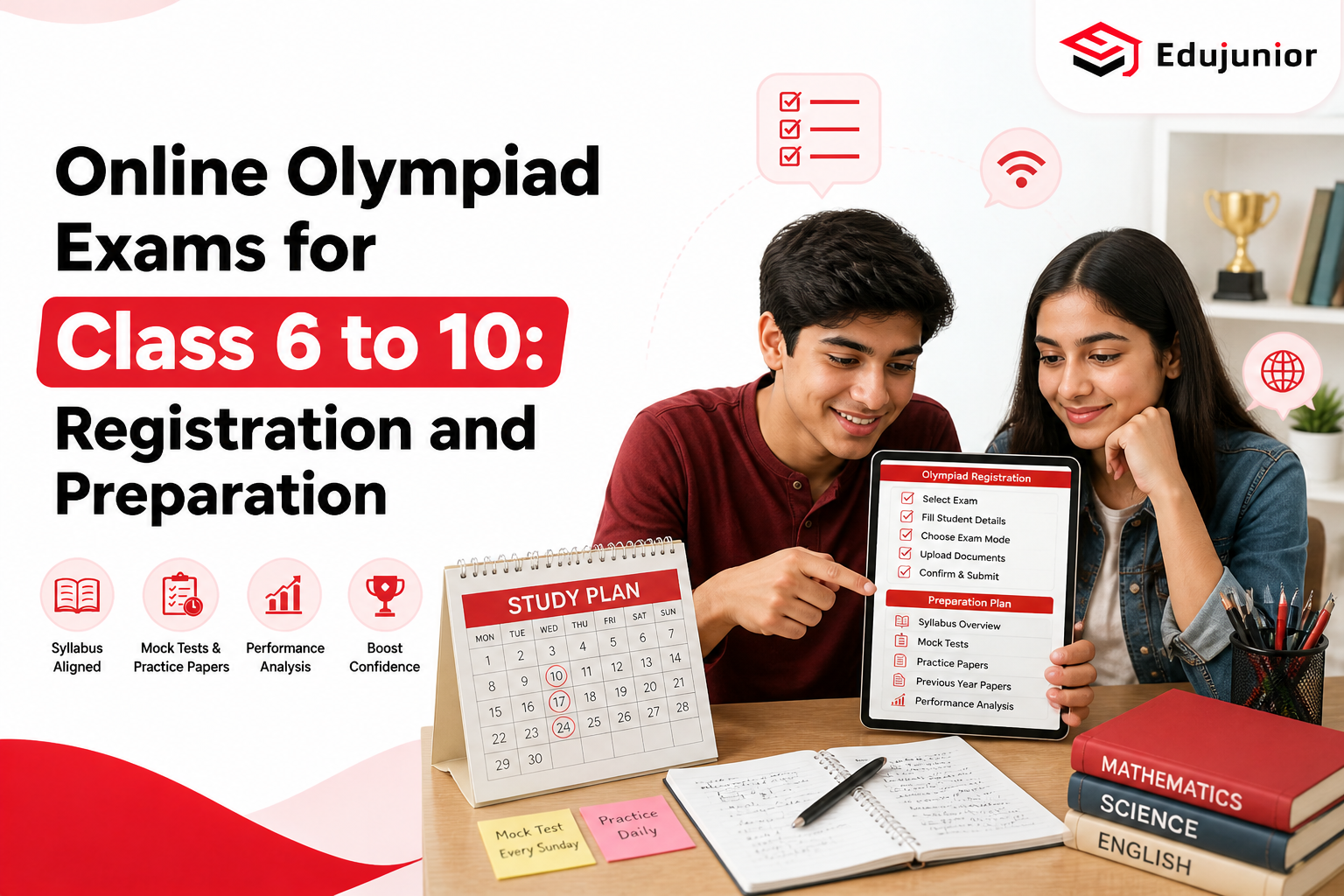
EduJunior offers online Olympiads, allowing students to participate remotely. Parents can explore the available competitions, eligibility criteria and exam instructions on its website.
5. How can students register for EduJunior Olympiads?
Students can visit the EduJunior Olympiad website, explore available competitions and follow the registration instructions for their chosen Olympiad.
Olympiads are not just about medals or ranks. They can teach children to pause, think, try again and trust their own reasoning. Start small, stay consistent and make learning part of the journey.
Explore EduJunior Olympiads and register your child for a learning challenge that goes beyond the classroom!